
slab vs steel sheet differences

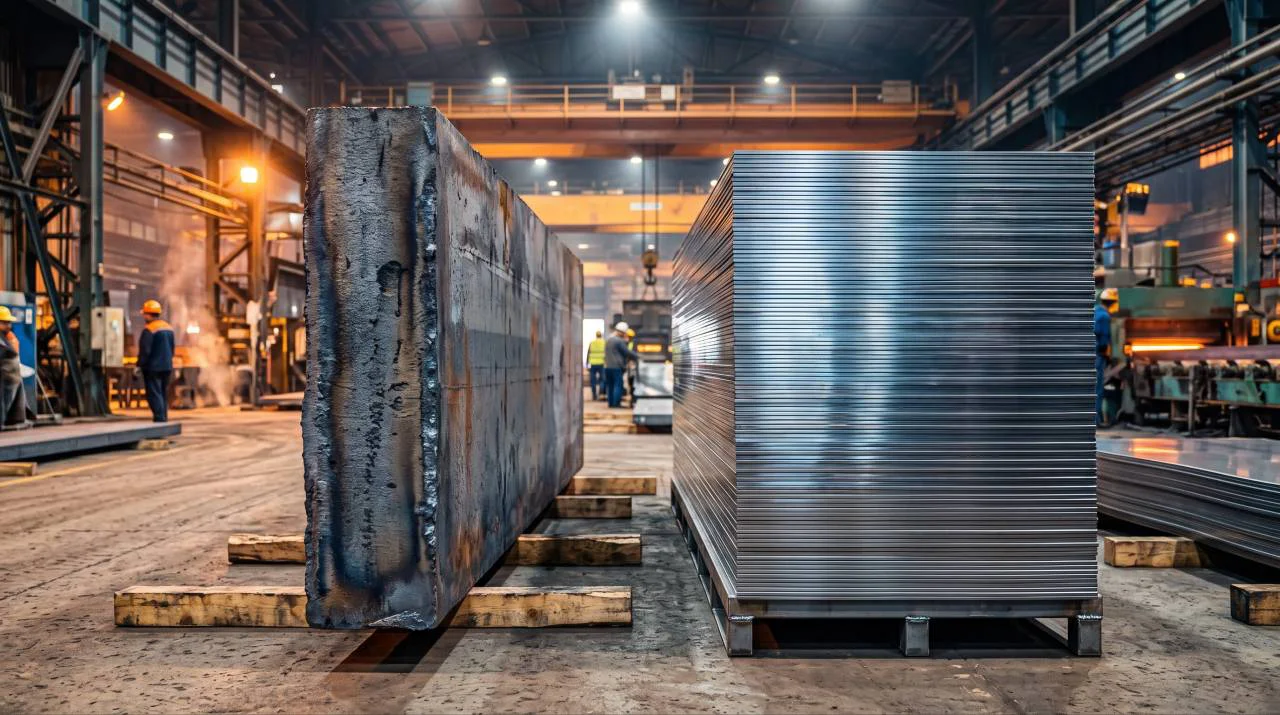
What Is the Difference Between a Slab, a Steel Sheet, and a Rolled Slab?
If you are unsure whether to choose a slab or a steel sheet when purchasing steel products, understanding the slab vs steel sheet differences can help you select the product that best suits your industrial needs. A slab, also known as a steel semi-finished product, is typically produced through continuous casting and serves as the raw material for manufacturing products such as hot-rolled steel sheets. In contrast, a steel sheet is produced by rolling a slab and is available in various thicknesses and dimensions for different applications. Therefore, these two terms refer to different products at different stages of the steel production chain.
Slabfferences vs Steel Sheet Diat a Glance
The main differences between a slab and a steel sheet lie in their production stages, final forms, and applications. A slab requires further processing to be converted into many flat steel products, whereas a steel sheet is a more finished product after rolling and may be ready for use or further processing.
| Steel Slab | Steel Sheet |
|---|---|
| A semi-finished steel product | A rolled steel product |
| Typically thicker and larger in dimensions | Produced in various thicknesses and dimensions |
| Raw material for producing steel sheets and other flat products | Used to manufacture industrial components and products |
| Requires further processing, such as rolling | May be ready for use or require additional processing |
What Is a Steel Slab?
A steel slab, also known as a slab billet or takhteh in some industry contexts, is one of the semi-finished products of the steel industry. It is generally produced through the continuous casting of molten steel, followed by solidification in a mold, and has a wide, rectangular cross-section. A slab is not usually a finished product used directly in construction or equipment manufacturing; instead, it serves as feedstock for rolling mills.
Slab characteristics vary depending on the steel grade, chemical composition, dimensions, and production conditions. The quality of the slab, including its structural uniformity and surface condition, affects the quality of the rolled product. For this reason, quality control during slab production is highly important.
What Is a Steel Sheet?
A steel sheet is a flat steel product typically produced by passing a hot slab through rolling stands to gradually reduce its thickness. Steel sheets are classified according to thickness, steel grade, mechanical properties, and production process. Some sheets are supplied directly after hot rolling, while others undergo processes such as cold rolling, pickling, or heat treatment to achieve the required thickness, surface quality, or mechanical properties.
Steel sheets are used in various industries, including construction, automotive manufacturing, tank fabrication, pipe manufacturing, industrial equipment, and metal component production. The appropriate sheet type should be selected based on operating conditions, technical requirements, and applicable standards.
Slab vs Steel Sheet: Differences in the Production Process
To better understand the differences between a slab and a steel sheet, it is important to consider their respective positions in the production line. After casting and solidification, a slab is generally transferred to a rolling mill. There, pressure applied by the rolls reduces its thickness, converting it into a steel sheet or coil. Consequently, the slab serves as the raw material, while the steel sheet is one of the products obtained through its processing.
- At the slab production stage, the main focus is on chemical composition, solidification, dimensions, and slab quality.
- At the rolling stage, the product’s thickness, shape, surface quality, and final properties are controlled.
- Defects present in the slab may become more apparent during rolling or affect the quality of the final steel sheet.
Differences Between Slabs and Steel Sheets in Terms of Dimensions and Applications
Slabs are generally produced and transported as thick rectangular sections with specified widths and lengths. Their dimensions are determined by equipment capacity and production line specifications. In contrast, steel sheets can be supplied as individual sheets or coils in a wide range of thicknesses and widths. Their final dimensions and specifications depend on the rolling process, steel grade, and customer requirements.
In terms of applications, slabs are primarily used in steel plants and rolling mills, whereas steel sheets serve as raw materials for manufacturing various products and components in downstream industries. Therefore, choosing between a slab and a steel sheet generally depends on whether the buyer needs raw material for further production or a rolled product for direct use or component manufacturing.
Does the Price of a Slab Differ from That of a Steel Sheet?
Yes, slab and steel sheet prices are not necessarily the same because steel sheets undergo additional processing stages. However, the prices of both products are influenced by factors such as steel grade, dimensions, order volume, market conditions, energy and transportation costs, and technical specifications. For an accurate price comparison, products with comparable grades, dimensions, and delivery conditions should be evaluated.
If the goal is to purchase raw material for rolling, a slab may be the more suitable option. However, for direct use or component manufacturing, a steel sheet with the appropriate technical specifications is generally more practical. The final decision should be based on available equipment, production requirements, and total processing costs.
How Do You Choose the Right Product?
Before choosing a slab or a steel sheet, identify your technical requirements and the stage of production you are working at. The following considerations can help guide your decision:
- Determine the final application and technical requirements of the product.
- Check the required steel grade, dimensions, and tolerances.
- If further processing is planned, consider the capacity of your rolling equipment and finishing facilities.
- Verify surface quality, mechanical properties, and required standards with the supplier.
- Compare prices while accounting for transportation costs, potential material waste, and processing expenses.
Conclusion
The main slab vs steel sheet differences are related to their production stages and applications. A slab is a semi-finished product and the raw material used to manufacture many flat steel products, whereas a steel sheet is produced by rolling a slab and reducing its thickness. Understanding the differences between slabs and steel sheets in terms of production processes, dimensions, quality, and applications can help you make a more informed decision.
If you need assistance selecting the right product, reviewing technical specifications, or requesting a price quotation, contact Hamgar Holding. The company’s experts can help assess your requirements and guide you toward the option best suited to your intended application.
Frequently Asked Questions
1. Are Steel Slabs and Steel Sheets the Same Product?
No. A slab is a semi-finished product that is typically rolled to produce steel sheets. A steel sheet is a flat product obtained by rolling a slab.
2. What Is the Difference Between a Slab and a Steel Sheet?
A slab is a raw material used in steel production and is generally thicker, whereas a steel sheet is a rolled product available in various thicknesses and dimensions.
3. Can Steel Sheets Be Produced from Any Slab?
Steel sheet production depends on the steel grade, slab specifications, rolling mill capabilities, and final product requirements. Therefore, not every slab is necessarily suitable for producing every type of steel sheet.
4. Which Is Better for Industrial Purchasing: A Slab or a Steel Sheet?
If you need raw material for rolling or further processing, a slab may be suitable. If you need a flat steel product for component manufacturing or industrial use, a steel sheet is generally the more appropriate option.